Blue decorative line graphic used in ProDetec branding

Infrared Hydrocarbon Gas Detectors

Infrared hydrocarbon gas detectors are a critical component of modern industrial safety systems, providing fast, reliable detection of combustible hydrocarbon gases in high-risk environments. Designed for continuous operation in harsh conditions, an infrared hydrocarbon gas detector offers superior stability, long service life, and reduced maintenance compared to traditional sensor technologies.

At ProDetec, we supply proven infrared gas detector solutions engineered for Australian industrial conditions, such as the GD10P from Simtronics, supporting compliance, asset protection, and personnel safety across oil & gas, mining, energy, and chemical sectors.

image1 (2)
Blue decorative line graphic used in ProDetec branding

Range of Infrared Hydrocarbon Gas Detectors

OLCT100 Gas Detector | Toxic and Combustible Gas Detector

OLCT100 Gas Detector | Toxic and Combustible Gas Detector

The OLCT100 fixed gas detector is a compact, explosion-proof device designed for continuous monitoring of toxic and flammable gases in hazardous industrial environments. Configurable with multiple sensor technologies, it detects hydrogen sulphide (Hâ‚‚S), carbon monoxide (CO), oxygen (Oâ‚‚), and combustible gases at lower explosive limit (LEL), making it a versatile solution for facilities managing multiple gas hazards.

Engineered for long-term reliability, the OLCT100 delivers stable sensor performance with straightforward calibration and minimal maintenance. Its robust, explosion-proof enclosure and hazardous area certification make it suitable for both indoor and outdoor installation across oil and gas, petrochemical, water treatment, mining, and manufacturing sites, where accurate, real-time gas detection is critical to protecting people, assets, and operations.

iTrans2 | Universal Multi-Sensor Transmitter | Fixed Gas Detector

iTrans2 | Universal Multi-Sensor Transmitter | Fixed Gas Detector

The iTrans2 Universal Multi-Sensor Transmitter is a versatile fixed gas detector engineered by Teledyne Oldham Simtronics for continuous monitoring of combustible, toxic, and oxygen gases in industrial and hazardous area environments. Delivering 1 or 2 points of detection from a single head, the iTrans2 supports electrochemical, catalytic bead, and infrared sensors, enabling true multi-gas detection from one explosion-proof platform.

Key features include smart sensor technology with automatic life indication, non-intrusive magnetic calibration, a dual-channel split-screen LED display, and flexible 4–20 mA, RS-485 Modbus, or optional HART communication. Available in epoxy-coated aluminium or 316 stainless steel enclosures with optional programmable relays, the iTrans2 suits oil and gas, petrochemical, water treatment, and food production applications.

GD10P | Point Infrared (IR) Gas Detector

GD10P CO2 Gas Detector

 The Infrared (IR) gas detectors differ from all other models, because they utilise silicon based solid-state infrared sources. The complete opto-mechanical design construction is so stable that an ultra fast speed of response can be achieved whilst providing unparalleled service life and detector stability, thus saving on maintenance and service costs.
The Simtronics GD10 Series of gas detector offers the longest combined detector and IR source warranty on the market: 5 years warranty & 15 years on IR sources.

GD10P | Point Infrared (IR) Gas Detector

GD10P | Point Infrared (IR) Gas Detector

The Simtronics GD10P detector is the benchmark for combustible gas detection for offshore oil and gas installations. It has set the standard for gas detectors in the areas of safety, stability and low maintenance both onshore & offshore. 

The GD10P has been designed with features that provide an effective response to the detection of gas hazards in a wide range of industrial environments from boiler plant rooms to offshore petrochemical installations. 

These IR gas detectors differ from all other models, because they utilise silicon based solid-state IR sources. The complete opto-mechanical design and construction is so stable that an ultra-fast speed of response can be achieved whilst providing unparalleled service life and detector stability, thus saving on maintenance and service costs. 

We offer the longest combined detector and IR source warranty on the market. 

For retrofit applications, a bridge interface is available allowing the detector to be connected directly to catalytic systems, using cabling and control modules. 

GD10PE High Sensitivity Gas Detector

GD10PE High Sensitivity Gas Detector

The GD10PE is designed for critical applications involving large volumes of air with high velocity. In places where you need fast reliable detection of low gas concentrations, GD10PE is in a class of its own. 

The versatile GD10PE is suitable for monitoring, among others, the HVAC air intakes of living quarters, temporary refuges and local equipment rooms. In addition, the ventilation air and combustion air intakes of gas turbines can be monitored along with the ventilation air extract duct, the only location where you can guarantee to detect a gas leak on a turbine package. With a measuring range of 0-20%LEL the GD10PE is 5 times more sensitive than standard point detectors. This, and a response time in the region of 1 second should cover even the most demanding requirements. It can also tolerate continuous operation at 85°C inside the duct. 

Blue decorative line graphic used in ProDetec branding

What Is an Infrared Hydrocarbon Gas Detector?

An infrared hydrocarbon gas detector is a fixed gas detection device that uses infrared (IR) absorption technology to identify the presence of hydrocarbon gases in the air. When a hydrocarbon gas passes through the detector’s optical chamber, it absorbs infrared light at a specific wavelength. The detector measures this absorption to determine gas concentration, typically displayed as a percentage of the Lower Explosive Limit (LEL).

Unlike catalytic or semiconductor sensors, a hydrocarbon gas detector based on infrared technology does not rely on combustion or chemical reactions. This makes a gas detector infrared solution inherently safer, more stable, and less susceptible to environmental interference. As a result, infrared technology has become the preferred choice for mission-critical gas detection applications.

gas-detection-header
Blue decorative line graphic used in ProDetec branding

Key Advantages of Infrared Gas Detection Technology

Infrared detection technology delivers multiple operational and safety advantages, particularly in environments where reliability and uptime are essential.

Fail-to-Safe Operation

An infrared gas detector is designed with fail-to-safe principles. If an optical path becomes obstructed or a component fault occurs, the detector generates a fault signal rather than a false safe reading. This ensures operators are alerted to potential issues immediately, supporting safer plant operations.

Immunity to Sensor Poisoning

Unlike catalytic bead sensors, an infrared hydrocarbon gas detector is immune to sensor poisoning caused by silicones, sulphur compounds, lead, or halogenated gases. This immunity significantly improves long-term reliability in industrial environments where contaminants are present.

No Oxygen Required for Detection

Because infrared detection relies on light absorption rather than combustion, a gas detector infrared system does not require oxygen to function. This allows accurate gas detection in inert or oxygen-deficient environments, including enclosed process areas, vessels, and confined spaces.

Reduced Calibration Requirements

Infrared sensors exhibit excellent long-term stability, enabling infrared hydrocarbon gas detector calibration intervals to be significantly longer than those of traditional technologies. This reduces maintenance costs and downtime while still supporting accurate readings during planned gas detector calibration programs.

Blue decorative line graphic used in ProDetec branding

Industries and Applications

null

Oil & Gas (Offshore & Onshore)

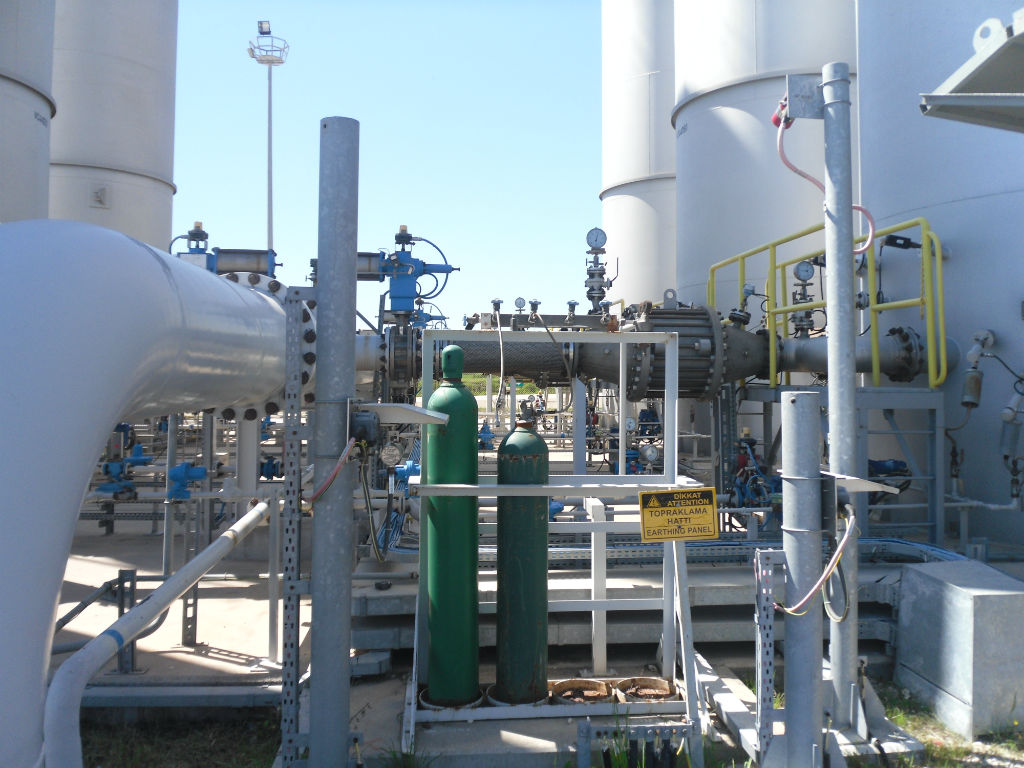
Infrared hydrocarbon gas detectors monitor methane, propane, and other gases across upstream, midstream, and downstream sites, typically installed near compressors, wellheads, and process skids for layered fire and gas protection.

null

Mining Operations

Mining environments need rugged detection for dust, vibration, and extreme temperatures. Infrared hydrocarbon detectors ensure reliable monitoring of methane and mixed hydrocarbons underground and on the surface.

null

Chemical & Petrochemical Plants

Petrochemical facilities rely on infrared gas detector solutions to monitor leaks around reactors, storage tanks, and transfer systems. Infrared sensors provide fast response and long-term accuracy, supporting both safety and regulatory compliance.

null

Hydrogen Energy & BESS Facilities

Infrared detectors cannot detect hydrogen, but they are essential in facilities where hydrogen is stored or produced with hydrocarbons. They are often integrated with hydrogen flame and gas sensors for complete risk mitigation.

null

Gas Transmission & Distribution

Pipeline networks and compressor stations use infrared hydrocarbon gas detectors for continuous monitoring. They’re ideal for outdoor installations requiring weather resistance and long service life.

Blue decorative line graphic used in ProDetec branding

Gases Detected by IR Hydrocarbon Sensors

Infrared hydrocarbon sensors are designed to detect a wide range of combustible gases, including:

  • Methane
  • Ethane
  • Propane
  • Butane
  • Ethylene
  • Propylene

These gases absorb infrared light at specific wavelengths, enabling a hydrocarbon gas detector to accurately measure their concentration.

Limitation – Hydrogen Detection:

Infrared technology cannot detect hydrogen because hydrogen molecules do not absorb infrared radiation. For hydrogen applications, complementary detection technologies must be used alongside an infrared hydrocarbon gas detector to ensure full coverage.

FDS301 Intelligent Visual Flame Detector
Blue decorative line graphic used in ProDetec branding

Australian Certifications & Compliance

All ProDetec infrared gas detector solutions are selected to meet stringent Australian and international safety requirements.

  • IECEx certification for use in hazardous areas
  • SIL 2 / SIL 3 functional safety ratings for safety instrumented systems
  • Compliance with relevant AS/NZS standards

These certifications ensure our infrared hydrocarbon gas detector range is suitable for critical safety applications across Australia, supporting operators who require compliant gas detectors in Australia.

ProDetec’s Role in Water Quality Monitoring
Blue decorative line graphic used in ProDetec branding

Our Infrared Gas Detection Range

ProDetec offers a comprehensive range of infrared gas detection solutions for industrial applications.

Our portfolio includes industry-leading products such as the GD10P, iTrans2, each engineered for precision, durability, and long-term performance.

Key Specifications and Features

  • Continuous monitoring up to 100% LEL
  • Fast response times for early leak detection
  • Stainless steel or marine-grade enclosures
  • IECEx and SIL-rated designs
  • Compatibility with fire & gas systems

Each infrared hydrocarbon gas detector is supported by detailed technical documentation and integration guidance.

Warranty Information

Our infrared detectors are backed by a 5-year product warranty, with IR sources rated for up to 15 years of operational life, providing confidence and reduced lifecycle costs.

OLCT100 Gas Detector | Toxic and Combustible Gas Detector

Speak to ProDetec About Infrared Gas Detection

Protect your people, assets, and operations with proven infrared hydrocarbon gas detector solutions from ProDetec. Our technical specialists provide expert advice, product selection, commissioning support, and lifecycle service to ensure your gas detection systems perform when it matters most.

Contact ProDetec today to discuss your infrared gas detection requirements and discover reliable solutions engineered for Australian industrial environments.

FAQs

ProDetec’s IR gas detectors require zero calibration. They are factory calibrated and are constantly ‘self-calibrating’ internally due to proprietary technology. Regular site bump tests occur depending on internal regulation, however there is no calibration needed for ProDetec’s offerings.

ProDetec’s GD10P Point IR Gas Detector provides a response time of T90 < 1.6 seconds . Meaning the detector will show 90% of the gas present within 1.6 seconds of exposure.

Yes. Infrared detectors are designed to operate reliably across wide temperature ranges, making them suitable for extreme industrial conditions, from arctic applications all the way to desert applications.

ProDetec’s Point IR Gas Detector requires virtually zero maintenance. Periodic inspection, functional testing, and scheduled gas detector bump testing are subject to internal quality assurance standards of the application.

Get In Touch